Cold Room vs Freezer Room: Which Does Your Business Need?
Restaurants, butcheries, farms and distributors often arrive at the same question when they outgrow their reach-in fridges: do we need a cold room or a freezer room? The two look almost identical from the outside, both built from insulated panels with a heavy door, but they are engineered very differently. Understanding the cold room vs freezer room difference before you commit saves money and protects the products you depend on.
Cold Room vs Freezer Room: The Temperature Difference
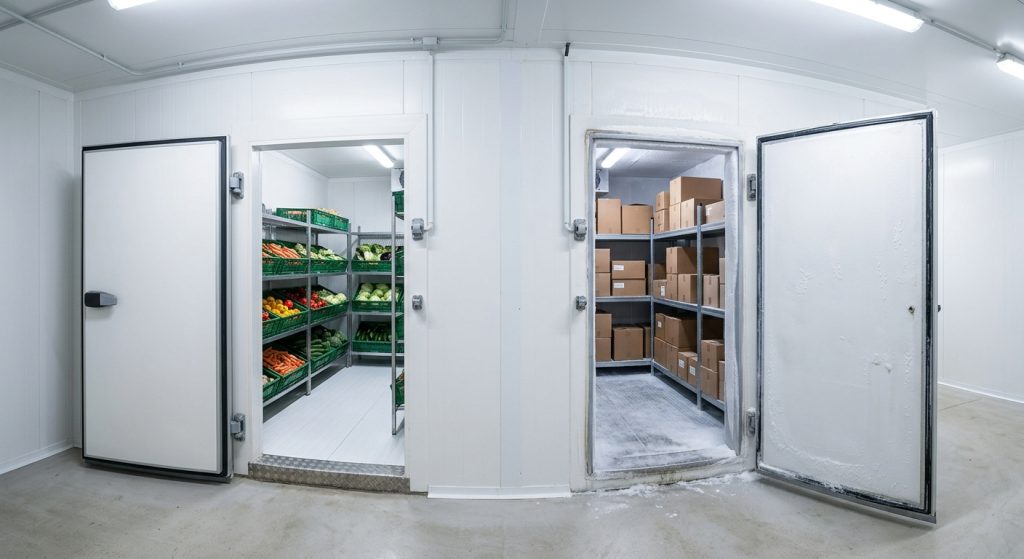
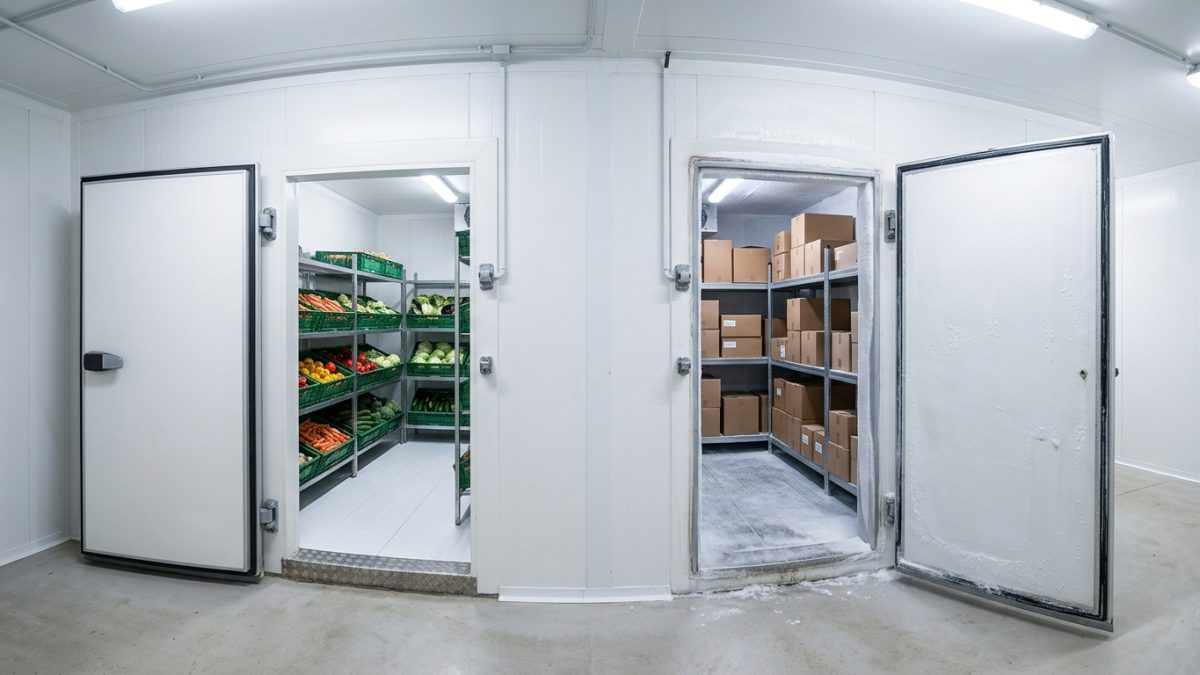
A cold room, sometimes called a chiller, keeps stock cool but above freezing. It’s the right environment for fresh fruit and vegetables, dairy, beverages, flowers and many pharmaceuticals. A freezer room holds stock well below zero to keep meat, fish, ice cream and prepared frozen meals frozen solid for long periods.
That single difference in target temperature drives every other decision in the build, from panel thickness to the type of door and the refrigeration plant behind it.
Insulation and Panel Thickness
Because a freezer room has to hold a much larger temperature difference between inside and outside, it needs thicker insulated panels than a chiller. Thicker panels slow the flow of heat into the room, which keeps the refrigeration plant from running non-stop. Panel joints matter even more in a freezer, since any gap becomes a cold bridge where ice forms.
Cool Maintenance manufactures panels with a tongue-and-groove joint and a pre-painted galvanised steel finish, built to South African Bureau of Standards (SABS) and HACCP requirements, so both chiller and freezer rooms stay airtight and hygienic.
Flooring and Doors
A cold room can often be built on an existing concrete slab. A freezer room usually can’t. Without an insulated floor, the cold eventually reaches the ground below, which can freeze and lift the slab over time. Freezer doors also need heated frames and tighter seals to stop them icing shut, while chiller doors can be simpler and lighter.
Running Costs and Product Range
A freezer room uses more energy than a cold room of the same size, so it only makes sense when your product genuinely needs to be frozen. Many businesses overestimate how much freezer space they need and end up paying to freeze stock that would be perfectly safe chilled.
When weighing up cold room vs freezer room options, list exactly what you store, in what volumes and for how long. Our cold rooms and freezer rooms are designed around that list, rather than around a catalogue size.
When a Combination Room Makes Sense
For many kitchens and butcheries the best answer is both: a freezer room accessed through a chiller ante-room. The chiller acts as a buffer, so warm air never rushes straight into the freezer when the door opens, which cuts frost build-up and energy use. Avoiding common cold storage mistakes, such as oversizing the freezer or placing doors in high-traffic paths, is far easier at the planning stage than after installation.
CONTACT US today to discuss whether a cold room, freezer room or combination unit is right for your business. We’ll help you specify the right panels, doors and flooring from the start.